
For anyone living in Gurgaon, this question doesn’t arrive once—it keeps returning.
It comes when your landlord raises the rent again.
It comes when a colleague buys a home and casually mentions their EMI is close to your rent.
And it comes late at night, when you think about stability, family, and where you actually want to be ten years from now.
Should I keep renting, or should I finally buy a home in Gurgaon?
There’s no emotional answer to this. Only a long-term one.
Most rent-vs-buy discussions fail because they focus on today. But housing decisions don’t play out in one year—they play out over decades. This blog looks at renting vs buying property in Gurgaon from a 10-year financial and practical perspective, using logic, real-life patterns, and everyday costs that people usually ignore.
No sales pitch. No exaggeration. Just clarity.
Why the Rent vs Buy Decision Feels So Confusing in Gurgaon
Gurgaon is not a traditional “settle-down” city for most people.
People come here for jobs, promotions, better pay. They switch companies, change sectors, move houses. Renting feels natural because life feels temporary. At the same time, Gurgaon’s real estate has matured—especially in planned residential zones—making ownership increasingly attractive.
So most people live with two conflicting thoughts:
- “Why lock myself into a property when my career might change?”
- “What if I regret not buying when prices were lower?”
Both thoughts are valid. The confusion only clears when you stop thinking short-term and start thinking 10 years ahead.
Renting a Home in Gurgaon: Comfortable, Flexible, but Finite
As we move into 2026, the Gurgaon real estate landscape is shifting from rapid price spikes to a more mature, stable phase. Here is how that affects your wallet.
Rental Housing in Gurgaon Today
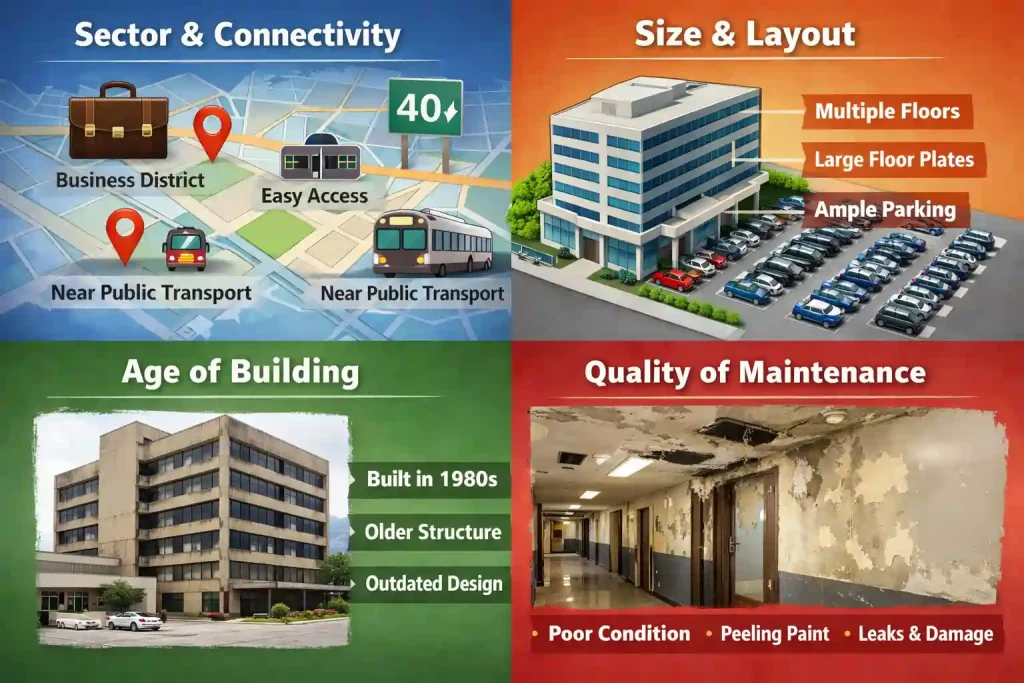
Rental housing in Gurgaon is abundant. From independent builder floors to large gated societies, there’s something for every budget. Rent depends on:
- Sector and connectivity
- Size and layout
- Age of the building
- Quality of maintenance
For working professionals and young families, renting feels convenient and familiar.
Why Renting Feels Like the Safer Choice
Renting offers immediate relief:
- No large upfront payment
- Easy mobility if your job changes
- No responsibility for repairs or upkeep
- Clear, short-term expenses
For many, this flexibility is valuable—especially in the early stages of a career.
The Long-Term Cost of Renting
The issue with renting doesn’t show up in the first year. It appears quietly over time.
- Rents increase every few years
- Negotiation power decreases in high-demand sectors
- Monthly outflow grows, but nothing accumulates
After 10 years of renting, one truth becomes unavoidable:
Rent money is spent. It does not return.
You may have lived comfortably—but financially, there is no asset, no equity, no protection from future rent hikes.
Buying Property in Gurgaon: Heavy in the Beginning, Lighter Over Time
Buying a flat in Gurgaon feels intimidating at first—and for good reason.
What Buying Actually Involves
- Down payment
- Monthly EMI
- Registration and stamp duty
- Maintenance charges
Calculating these costs upfront is crucial to avoid financial stress. If you’re worried about hidden fees, read our [Stop Overpaying: The Ultimate Stress-Free Guide to Budgeting for Your Dream Home in Gurgaon (2025-26 Edition)] for a complete breakdown.
When you pay EMI:
- A portion goes toward ownership
- Your loan balance reduces every year
- Your property value has the potential to grow
This is the key difference between renting vs buying home long term in India.
A Practical 10-Year Comparison: Renting vs Buying
Exact numbers vary by sector, size, and timing, so instead of precise figures, let’s compare outcomes.
If You Rent for 10 Years
- Rent increases gradually
- Total outflow becomes significant
- No asset is created
- You remain exposed to market rents
After 10 years, you still need a house—and still need to pay rent.
If You Buy for 10 Years
- EMI remains relatively stable
- Loan principal reduces each year
- Property value grows over time
- You gain flexibility—to live, rent out, or sell
At the end of 10 years, you own a tangible asset—fully or partially. Your housing cost becomes predictable instead of uncertain.
This is the long-term cost of buying a house in Gurgaon versus renting.
When Does Buying a Home Make More Sense Than Renting?
Buying is not always the right answer—but it becomes the logical one under certain conditions.
Buying usually makes sense when:
- You plan to stay in Gurgaon for 5–7 years or more
- Your EMI is close to your current rent
- Your income is stable and growing
- You want long-term housing security
At this point, many people realise that buying a house in Gurgaon is worth it, not emotionally—but financially.
Key Reasons Buying Often Wins in Gurgaon
Many first-time buyers ask: what is carpet area in property?
Carpet area is the actual usable space inside your home. When comparing options, always look at:
- Carpet area, not just advertised size
- Cost per usable square foot
This helps make fair comparisons between buying and renting—and avoids surprises later.
The Gurgaon Real Estate Market Today
The Gurgaon real estate market has entered a mature phase.
It now rewards:
- Practical layouts
- Legal clarity
- Quality construction
- Long-term livability
This maturity makes buying a strategic decision, not speculation.
Modern developers like Ganga Realty Gurgaon are leading this shift by focusing on RERA-compliant, planned residential developments in high-growth corridors like the Dwarka Expressway, ensuring that 2026 buyers get long-term livability instead of just short-term hype.
Rent vs Buy in Gurgaon: A 10-Year View
- Renting offers flexibility, not asset creation
- Buying requires commitment, but builds long-term value
- Over 10 years, ownership often costs less net than renting
- The right choice depends on stability, not fear
So, Should You Buy or Rent in Gurgaon?
If Gurgaon is a temporary stop, renting makes sense.
If Gurgaon feels like home—or is likely to become one—buying becomes a stronger financial decision.
The real question is not:
“Can I buy today?”
“Where will I stand after 10 years if I don’t?”
Frequently Asked Questions (FAQs)
Is 2026 a good year to buy a home in Gurgaon, or should I wait?
How much can I expect my rent to increase in Gurgaon this year?
Will Home Loan interest rates decrease in 2026?
Which are the best “Value for Money” sectors in 2026?
New Gurgaon (Sectors 82-95): Best for mid-segment budgets with ready infrastructure.
Dwarka Expressway (Sectors 102-113): High appreciation potential as the corridor matures.
Sohna Road: Ideal for those looking for affordable luxury and green spaces.
What is the “Rent-to-EMI” gap in Gurgaon right now?
Should I buy a “Ready-to-Move” or “Under-Construction” flat in 2026?
Under-Construction: Best if you want a lower entry price. With RERA becoming stricter in 2026, the risk of project delays has significantly decreased, making it a viable option for wealth creation.