
A Gurgaon Investor’s Reality Check (2026)
If you’ve looked at even three property projects in Gurgaon, you’ve probably heard this sentence:
Most investors smile politely when they hear it.
Some believe it.
Many later regret it.
The truth is, Gurgaon real estate isn’t unsafe.
What makes it risky is decisions based on persuasion instead of proof.
This article isn’t anti-broker.
It’s pro-clarity.
If you’re planning to invest in Gurgaon in 2026 — especially below ₹3 crore — this is how experienced investors quietly filter good opportunities from expensive mistakes.
Table of Contents
Why Depending Fully on Brokers Has Become Risky
Earlier, brokers were the only source of information.
That’s no longer true.
Today, investors have:
- HRERA portals
- Online land records
- Construction updates
- Resident reviews
- Infrastructure timelines
Yet many decisions are still made on:
- “Limited inventory” pressure
- Fancy sample flats
- Half comparisons
That gap — between available information and used information — is where losses happen.
Smart investors don’t rush visits.
They prepare before them.
Step 1: Understand Gurgaon Real Estate Market Mood (2026)
Before discussing any project, you should understand one thing:
Who is buying right now?
As per Gurgaon real estate market trends for 2026:
- End-users are dominating purchases
- Short-term speculation has reduced
- Buyers are more cautious, not emotional
This is actually a healthy phase.
Markets driven by real residents don’t crash suddenly.
They move slower — but safer.
That’s why sectors around Dwarka Expressway, especially 84–85, are quietly gaining strength without loud advertising.
RBI Repo Rate: Why Serious Investors Track It
Most people notice interest rates only when EMIs increase.
Experienced investors track them before buying.
When RBI repo rates rise:
- Speculative buyers exit
- Rental demand improves
- Prices stabilise instead of shooting unrealistically
This is why the impact of RBI repo rate on Gurgaon home loans actually helps long-term investors.
Stability beats hype every time.
Want to go deeper?
What Really Increases Property Value in Gurgaon: Location, Builder, or Timing?
👉 Read More
Residential vs Commercial: The Confusion That Costs Money
Many investors assume commercial property = higher return.
In reality, especially on Dwarka Expressway:
Commercial units mean:
- Bigger investment
- Vacancy risk
- Business dependency
Residential property offers:
- Easier renting
- Faster resale
- More end-user demand
For most individual investors, residential vs commercial ROI in Dwarka Expressway clearly favours residential, particularly livable mid-luxury homes.
Liquidity is safety.
Infrastructure Creates Value (Not Discounts)
Good brokers sell offers.
Good investors follow infrastructure.
Sector 84–85 is benefiting because:
- Expressway connectivity is real now
- Roads are functional, not promised
- Commercial and social infra is planned
Infrastructure doesn’t shout.
It just keeps adding value quietly.
Luxury vs Affordable: What Demand Is Actually Doing
Affordable housing looks safe on paper.
In reality, it’s extremely price-sensitive.
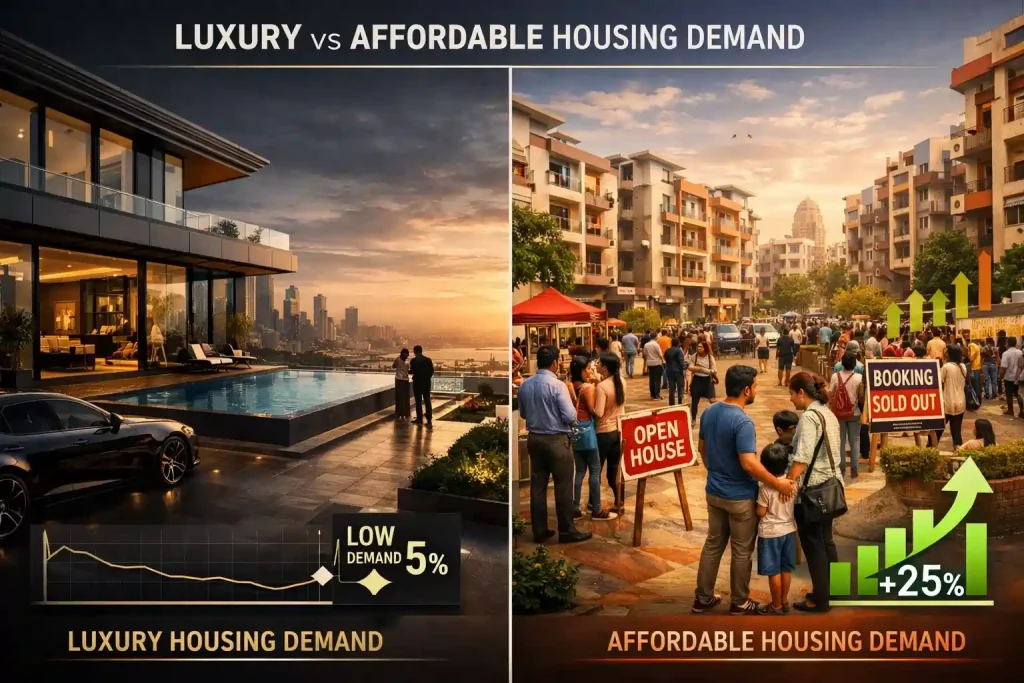
Luxury demand behaves differently.
In Delhi NCR:
- Luxury buyers buy to live
- They care about layout, privacy, maintenance
- They don’t panic-sell easily
That’s why many safe investment properties in Gurgaon under ₹3 crore are well-designed mid-luxury homes, not the cheapest options.
HRERA Verification: Non-Negotiable
Never accept screenshots.
Never accept “sir approved hai”.
Check HRERA yourself.
Five minutes on the Haryana RERA website can save years of stress.
This one habit alone removes most risks.
How to Read Projects Without Marketing Glasses
Brochures hide flaws.
Ground reality exposes patterns.
When reviewing projects like Ganga Nandaka or Ganga Liv89, experienced investors look at:
- Location logic
- Surrounding development
- Practical layouts
- Timeline alignment with approvals
Emotion has no place here.
Construction Quality: The Silent Value Creator
Marble lobbies don’t matter after possession.
Structure does.
Check:
- Past deliveries
- Maintenance condition of older projects
- Resident feedback (not testimonials)
Consistency beats branding.
Title Deeds & Documentation: Slow Down Here
Use Jamabandi records.
Check encumbrances.
If documents feel confusing, pause.
Confusion is usually a warning sign.
Rental Yield Is Not Optional
Rental yield:
- Supports EMI
- Shows livability
- Reduces downside risk
If a project can’t attract tenants, appreciation stories are fragile.
Under-Construction Red Flags Investors Miss
Be cautious if you see:
- Unrealistic possession dates
- Heavy discounts without reason
- Vague approvals
- Too much urgency
Patience is underrated in real estate.
Delivery Track Record Tells the Truth
Promises are easy.
Handovers are not.
Check:
- Past possession timelines
- Actual completion, not launch claims
- RERA compliance history
Builders don’t change habits overnight.
Always Plan the Exit First
Before buying, ask:
- Who will buy this from me later?
- Will tenants want to live here?
- Is resale realistic?
Entry is optional.
Exit is mandatory.
Final Thought
Safe property investment isn’t about avoiding brokers.
It’s about not outsourcing judgment.
In 2026 Gurgaon:
- Information is available
- Regulation exists
- Mistakes are preventable
The calm investor usually wins.
Can I invest safely in Gurgaon without using brokers?
Yes. It’s possible if you independently verify all legal documents, research the developer’s track record, and avoid rushed decisions.
Which areas are likely to be the safest for investment in 2026?
Sectors along the Dwarka Expressway—especially Sectors 84–85—are considered safer due to completed infrastructure and growing end-user demand.
Is residential real estate safer than commercial?
For individual investors, residential properties are generally safer as they offer easier liquidity and more stable demand.
Are luxury projects safer than affordable housing?
In the right location, yes. Luxury projects often attract end users rather than speculators, which reduces volatility.